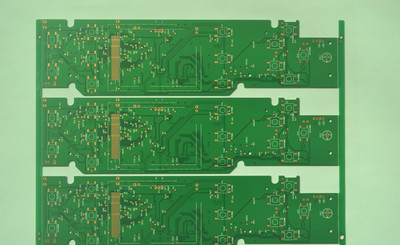
Power Control PCBA is a critical circuit board assembly designed to regulate, distribute, and protect electrical power in a wide range of electronic systems—from consumer devices (e.g., laptops, smartphones) to industrial equipment (e.g., factory machinery, medical devices). Unlike general-purpose PCBs, it prioritizes high efficiency (to minimize energy loss), voltage/current stability (to protect sensitive components), and robust protection mechanisms (to prevent damage from overloads or short circuits). Its core role is to convert input power (AC or DC) into the precise voltage/current levels required by the system, monitor power flow, and intervene in abnormal conditions (e.g., overvoltage, overcurrent).
The technical architecture of Power Control PCBA revolves around power conversion and management components. Key elements include DC-DC converters (e.g., buck converters for stepping down voltage, boost converters for stepping up) or AC-DC rectifiers (to convert alternating current from the grid to direct current for devices). These use power semiconductors like MOSFETs (Metal-Oxide-Semiconductor Field-Effect Transistors) or IGBTs (Insulated Gate Bipolar Transistors) for efficient power switching. A dedicated power management IC (PMIC, e.g., Texas Instruments TPS65983) acts as the “brain,” controlling converter output, monitoring power parameters, and triggering protection modes. Voltage regulators (linear or switching) ensure stable power supply to low-voltage components like microcontrollers, while current sensors (e.g., shunt resistors, Hall-effect sensors) track current flow for real-time monitoring.
Protection and efficiency are central design focuses. The PCBA integrates multiple safety features: overvoltage protection (OVP) to cut power if input voltage exceeds safe limits, overcurrent protection (OCP) to prevent component damage from excessive current, and short-circuit protection (SCP) to isolate faults. Thermal management is critical—heat sinks or thermal pads are attached to high-power components (e.g., IGBTs) that generate heat during switching, while thermal fuses shut down the system if temperatures rise too high (typically above 125°C). The PCB uses high-temperature, flame-retardant materials (FR-4 with V-0 rating and Tg ≥170°C) to withstand heat and comply with safety standards (e.g., IEC 60950 for IT equipment).
In practical applications, Power Control PCBA enables reliable power delivery across industries. In consumer electronics, it powers laptop charging systems, converting AC grid power to 19V DC for the battery. In industrial settings, it regulates power for factory robots, ensuring stable voltage to prevent movement errors. In medical devices (e.g., MRI machines), it provides isolated power to avoid electrical interference with sensitive sensors. For manufacturers, this PCBA is essential for ensuring device safety and efficiency—poor power control can lead to component failure, shortened lifespan, or even safety hazards like overheating. Its versatility makes it a foundational component in nearly every electronic system that requires managed power.




 Home >


