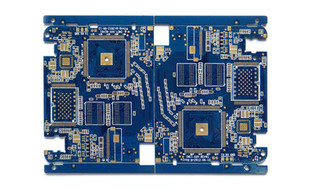
PCBA small-batch trial production refers to the low-volume manufacturing
process of Printed Circuit Board Assemblies (PCBAs) — typically ranging from 10
to 500 units — conducted before mass production. This stage is critical for
verifying design feasibility, identifying potential issues, and optimizing the
production process, making it ideal for startups, R&D teams, and enterprises
launching new electronic products (e.g., IoT devices, industrial sensors,
consumer electronics prototypes). Unlike mass production, small-batch trial
production prioritizes flexibility, rapid iteration, and comprehensive testing
over high efficiency and low cost.
The core workflow of PCBA small-batch trial production includes design
review & DFM analysis, prototype PCB manufacturing, component sourcing &
inspection, manual/semi-automated assembly, and multi-dimensional testing.
Design review and Design for Manufacturability (DFM) analysis are the first
steps: engineers check the PCB design (Gerber files, BOM) for manufacturability
issues, such as incorrect pad sizes, inappropriate component spacing, or
incompatible solder mask openings. This helps avoid assembly failures and
reduces rework costs. For example, if a BOM lists a discontinued component, the
team can quickly replace it with an alternative during the trial stage.
Prototype PCB manufacturing focuses on precision: small-batch PCBs are
often produced using quick-turn processes (e.g., 24-48 hour lead time) with
materials matching the intended mass production specs (e.g., FR-4 substrate, 1-8
layers). Component sourcing requires flexibility — since small quantities may
not meet the minimum order quantities (MOQs) of large suppliers, teams often
work with distributors specializing in prototype components to ensure timely
delivery. Component inspection is strict: each part is verified for
authenticity, correct model, and intact packaging to prevent counterfeit or
defective components from affecting test results.
Assembly for small-batch PCBA combines manual and semi-automated processes:
surface-mount components (SMDs) are placed using desktop pick-and-place machines
(suitable for low volumes), while through-hole components (THCs) are soldered
manually by skilled technicians. This balances precision and flexibility — if
design adjustments are needed (e.g., changing a resistor value), the assembly
process can be modified quickly without reconfiguring large production
lines.
Multi-dimensional testing is the key value of small-batch trial production:
tests include electrical testing (continuity, short-circuit, voltage/current
measurement), functional testing (verifying the PCBA performs its intended
functions, e.g., a sensor PCBA correctly detecting temperature), environmental
testing (temperature cycling, humidity resistance for harsh-use products), and
reliability testing (vibration, drop tests for portable devices). Any issues
identified — such as unstable signal transmission or component overheating — are
fed back to the R&D team for design optimization. For example, if a
functional test finds an IoT PCBA fails to connect to Wi-Fi, engineers can
adjust the antenna layout or replace the wireless module before mass
production.
In practical applications, PCBA small-batch trial production reduces risks
for new products. A startup developing a smart home thermostat uses small-batch
production (100 units) to test different sensor configurations, ensuring
accurate temperature reading before scaling to 10,000 units. An R&D team for
an industrial sensor conducts environmental testing during small-batch
production, confirming the PCBA can withstand -40°C to 85°C temperatures in
factory settings. For any entity bringing a new electronic product to market,
small-batch trial production is an indispensable step to ensure product quality
and market success.




 Home >


