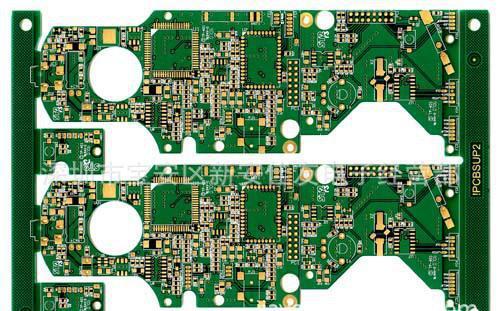
Resistor and capacitor selection is a foundational step in PCBA design, directly impacting circuit performance, reliability, and cost-effectiveness. Unlike generic component choices, this process requires matching electrical parameters to the circuit’s functional needs—while considering environmental conditions (temperature, humidity), space constraints, and long-term stability. Resistors and capacitors are not interchangeable; improper selection can lead to circuit failure (e.g., overheating resistors, capacitor leakage) or suboptimal performance (e.g., signal distortion, voltage ripple).
For resistors, key parameters guide selection. Resistance value must match the circuit’s requirements (e.g., 1kΩ for current limiting, 1MΩ for voltage division), with a tolerance range (±1%, ±5%, ±10%) chosen based on precision needs—high-precision circuits (e.g., medical devices) use ±1% resistors, while consumer electronics may accept ±10%. Power rating (0.125W, 0.25W, 0.5W, etc.) ensures the resistor can dissipate heat without damage; a resistor handling 100mA at 5V (0.5W power) requires a 0.5W or higher rating to avoid overheating. Temperature coefficient (ppm/°C) is critical for extreme environments—industrial PCBs may use metal film resistors (±25ppm/°C) instead of carbon film (±100ppm/°C) to maintain stability in -40°C to 85°C conditions. Package size (0402, 0603, 0805) aligns with PCB space; compact devices (e.g., wearables) use 0402 resistors, while high-power circuits prefer larger 0805 or 1206 packages.
Capacitor selection focuses on capacitance value, voltage rating, and dielectric material. Capacitance (nF, μF) matches the circuit’s role—10μF electrolytic capacitors for power supply filtering, 0.1μF ceramic capacitors for decoupling (near ICs to suppress voltage spikes). Voltage rating must exceed the maximum circuit voltage (e.g., a 16V capacitor for a 12V power rail) to prevent dielectric breakdown. Dielectric material dictates performance: ceramic capacitors (X5R, X7R) are ideal for high-frequency applications (e.g., RF circuits) due to low ESR (Equivalent Series Resistance), while electrolytic capacitors (aluminum, tantalum) offer high capacitance for power filtering—tantalum capacitors are preferred for compact, low-leakage designs (e.g., smartphones), though aluminum is more cost-effective for industrial use. Environmental factors matter too: high-temperature PCBs (e.g., automotive under-the-hood systems) use capacitors rated for 125°C, while consumer devices may use 85°C-rated options.
Practical selection also considers availability and cost. Standard values (e.g., 10kΩ resistors, 10μF capacitors) are easier to source and cheaper than custom values. For mass production, choosing components from reputable suppliers (e.g., Vishay, Murata) ensures consistency and compliance with standards (RoHS, REACH). For example, a power control PCBA might use 0603 metal film resistors (±1%, 0.25W) for current sensing and X7R ceramic capacitors (100nF, 25V) for decoupling, while a solar inverter PCBA would opt for high-voltage electrolytic capacitors (470μF, 450V) for DC-link filtering. Proper resistor and capacitor selection is not just a technical task—it balances performance, reliability, and cost to ensure the PCBA meets its design goals.




 Home >


