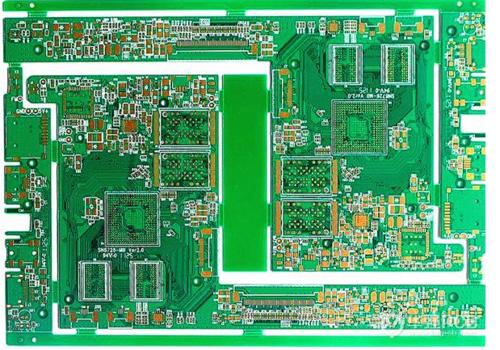
PCBA power device layout is a specialized design process focused on
positioning high-power components (e.g., IGBTs, MOSFETs, voltage regulators,
rectifiers) to ensure efficient heat dissipation, minimal power loss, and stable
electrical performance. Unlike standard component layout (which prioritizes
space efficiency), power device layout must address the unique challenges of
high-current/high-voltage circuits—including thermal management, current path
optimization, and electromagnetic interference (EMI) reduction. Poor layout can
lead to overheating (reducing component lifespan by 50% for every 10°C increase
above rated temperature), voltage drops (causing power inefficiency), or
EMI-related malfunctions in sensitive circuits (e.g., microcontrollers).
The core principles of power device layout revolve around thermal path
optimization and current loop minimization. For heat dissipation, power devices
(which generate 1W–100W of heat) are placed near PCB edges or heat sinks, with
large copper pours (2oz–4oz copper) connected directly to the device’s thermal
pads—copper acts as a heat conductor, spreading heat across the PCB to reduce
hotspots. Thermal vias (plated through-holes with 0.3mm–0.5mm diameter) are
placed in arrays under the device, transferring heat from the top PCB layer to
internal or bottom copper planes, which act as passive heat sinks. For example,
an IGBT in a solar inverter PCBA might have 10–15 thermal vias (0.4mm diameter,
1mm pitch) under its thermal pad, paired with a 4oz copper pour connected to a
heatsink via thermal adhesive.
Current path design is equally critical. High-current paths (carrying
1A–50A) are made with wide, short traces (2mm–5mm width for 10A current) to
minimize resistance (and thus power loss via I²R heating). Parallel traces are
used for extremely high currents (e.g., 50A+), ensuring current is evenly
distributed. Current loops (formed by power devices and their associated
components, e.g., capacitors) are kept as small as possible—smaller loops reduce
parasitic inductance (which causes voltage spikes during switching) and EMI
radiation. For example, a buck converter’s power MOSFET and output capacitor are
placed within 5mm of each other, creating a current loop less than 10mm² to
suppress switching noise.
EMI and safety considerations guide additional layout choices. Power
devices are separated from sensitive analog/digital circuits (e.g.,
microcontrollers, sensors) by at least 5mm–10mm, with ground planes acting as
EMI shields. High-voltage components (e.g., 450V rectifiers in power supplies)
are placed with sufficient creepage (distance along the PCB surface, ≥6mm for
250V AC) and clearance (air distance, ≥3mm for 250V AC) to prevent arcing. For
automotive or industrial PCBs, power device layout also complies with standards
like IEC 60950 (safety) and CISPR 22 (EMI), ensuring regulatory compliance. A
well-executed power device layout is not just a design task—it directly impacts
the PCBA’s efficiency, reliability, and safety in high-power applications.




 Home >


