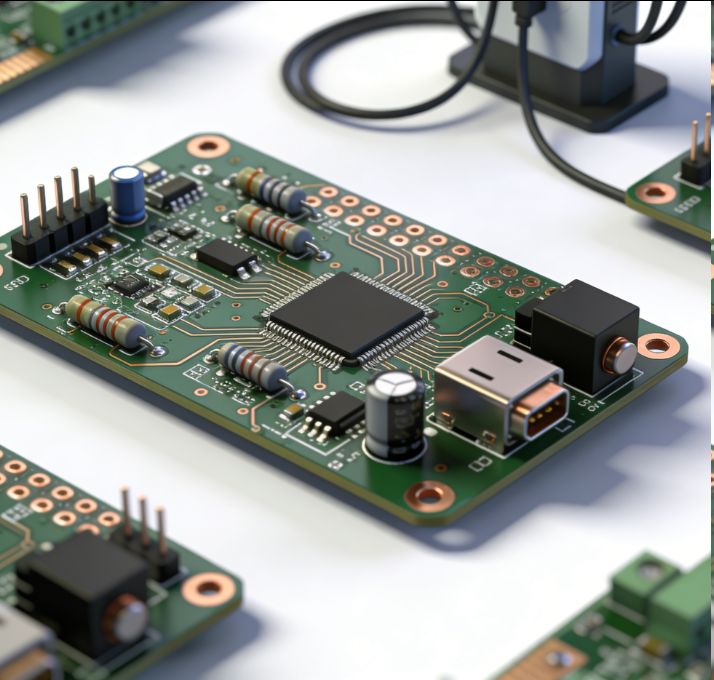
PCB circuit boards dedicated to charging piles are core components that
manage power conversion, data communication, and safety protection for electric
vehicle (EV) charging systems—critical for ensuring efficient, reliable, and
safe charging. These PCBs are designed to handle high voltages (AC 220V/380V
input, DC 200V–1000V output for fast charging) and high currents (up to 600A for
ultra-fast chargers), requiring robust material selection and layout design.
Key functional modules on these PCBs include: a power conversion module
(with IGBTs or SiC MOSFETs to convert AC to DC and regulate voltage/current), a
communication module (supporting CAN, Ethernet, or 4G/5G for connecting to
charging networks and EVs), and a safety protection module (with overvoltage,
overcurrent, and leakage current detection circuits). To withstand high power
dissipation, PCBs use high-Tg (glass transition temperature) FR-4 material (Tg
≥170°C) or ceramic substrates, and feature thick copper layers (2–4 oz) for
efficient heat transfer.
Design considerations include electromagnetic compatibility (EMC) to avoid
interference with grid signals, and waterproof/anti-corrosion coatings (e.g.,
conformal coating) for outdoor charging piles. For example, PCB boards for Tesla
Superchargers integrate SiC-based power modules to reduce energy loss and enable
250kW fast charging. These PCBs are essential in residential, commercial, and
public charging stations, ensuring EVs charge quickly while adhering to
international safety standards (e.g., IEC 61851). For charging pile
manufacturers, high-performance PCBs directly impact charging speed, energy
efficiency, and long-term reliability.




 Home >


