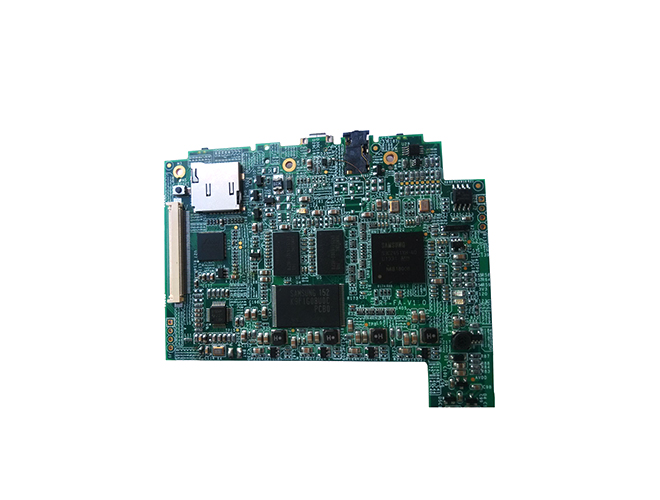
Designing low - power circuits on single - sided PCBs is crucial for
applications where energy conservation is a priority, such as battery - powered
devices or energy - efficient home appliances. The limited space and trace
routing options of single - sided PCBs pose challenges, but with careful design
considerations, highly efficient low - power circuits can be achieved.
Component selection is the first and most important step in low - power
circuit design for single - sided PCBs. Low - power integrated circuits (ICs)
are preferred. For example, microcontrollers with low - power modes, like sleep
and standby modes, can significantly reduce power consumption when the device is
not actively performing tasks. These microcontrollers can be programmed to wake
up at specific intervals or in response to certain events, minimizing
unnecessary power usage. Additionally, low - dropout regulators (LDOs) are often
chosen for power regulation on single - sided PCBs. LDOs have a low quiescent
current and high efficiency, reducing power losses during the voltage -
regulation process. Low - power resistors and capacitors are also selected, as
their lower power - dissipation characteristics contribute to the overall energy
efficiency of the circuit.
Efficient power management strategies are essential. One approach is to
implement power - gating techniques. In a single - sided PCB circuit, different
functional blocks can be powered off when they are not in use. For instance, in
a sensor - based device on a single - sided PCB, if the sensor is only required
to sample data at specific intervals, the sensor and its associated signal -
conditioning circuit can be powered off between sampling periods. This can be
achieved by using power - MOSFETs as switches, which are controlled by the
microcontroller or other control logic on the PCB. Another power - management
strategy is to optimize the clock speed of the digital components. Reducing the
clock frequency when full processing power is not needed can lead to substantial
power savings, especially in circuits with microcontrollers or digital signal
processors.
Trace routing on single - sided PCBs also impacts power consumption.
Minimizing the length of power - supply traces can reduce resistive losses.
Short and wide power - supply traces are preferred to lower the resistance and
thus the power dissipated as heat. Moreover, proper grounding is vital. A well -
designed ground plane on the single - sided PCB helps in reducing electrical
noise, which can cause additional power consumption in the form of signal -
distortion - related losses. By ensuring a low - impedance ground path for all
components, the overall efficiency of the low - power circuit can be
improved.




 Home >


