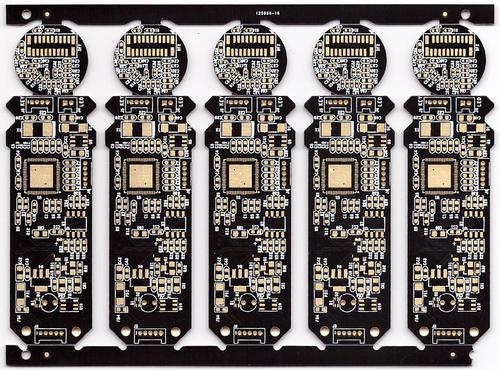
Drone flight control PCBA (Printed Circuit Board Assembly) is the core "brain" of a drone, integrating hardware and software to manage flight stability, navigation, and motor control. Unlike standard consumer electronics PCBs, this specialized assembly must withstand harsh aerial conditions—including vibration, temperature fluctuations (-20°C to 60°C), and electromagnetic interference (EMI)—while delivering real-time, high-precision performance. Its primary role is to process data from multiple sensors, calculate flight paths, and send commands to the drone’s motors, ensuring smooth takeoffs, landings, hovering, and maneuvering.
The technical design of drone flight control PCBA prioritizes sensor integration and processing power. Key components include a 32-bit or 64-bit microcontroller (MCU) or system-on-chip (SoC) (e.g., STM32H7 series, ESP32-S3) with high clock speeds (up to 480 MHz) to handle complex algorithms. It also integrates a suite of sensors: accelerometers (to detect linear motion), gyroscopes (for angular velocity), magnetometers (for direction), barometers (for altitude measurement), and GPS modules (for positioning, with accuracy down to 1–3 meters). Advanced models add IMUs (Inertial Measurement Units) that combine accelerometers and gyroscopes for more precise motion tracking, and some include visual positioning sensors (e.g., cameras or LiDAR) for indoor or GPS-denied environments.
Power management is critical for reliable flight. The PCBA includes voltage regulators (e.g., DC-DC converters) to stabilize power from the drone’s battery (typically 11.1V or 14.8V LiPo batteries) and supply clean power to sensitive components. EMI shielding (e.g., copper foils or metal enclosures) protects the PCB from interference from motors or radio transmitters, preventing signal degradation that could cause flight instability. Additionally, the PCB layout is optimized for minimal signal delay—short, wide traces for power paths and impedance-matched traces for sensor signals—to ensure data is processed and transmitted in real time (latency under 10ms).
In practical drone applications, this PCBA supports diverse use cases. For consumer drones (e.g., DJI Mini series), it enables features like "follow me" mode and obstacle avoidance. For industrial drones (used in agriculture or inspection), it integrates with payload controllers (e.g., for spraying systems or thermal cameras) and long-range communication modules (e.g., 4G/5G) for beyond-visual-line-of-sight (BVLOS) flight. Durability features like conformal coating (a protective polymer layer) prevent moisture or dust damage, extending the PCBA’s lifespan in outdoor environments. For drone manufacturers, flight control PCBA is the most critical component—its performance directly determines flight safety, stability, and user experience.




 Home >


