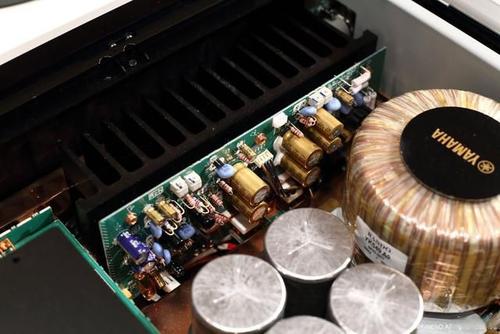
Automotive electronics PCBA assembly focuses on manufacturing high-reliability Printed Circuit Board Assemblies for vehicle-mounted electronic systems—such as engine control units (ECUs), infotainment systems, advanced driver-assistance systems (ADAS), battery management systems (BMS) for electric vehicles (EVs), and lighting control modules. Unlike consumer electronics PCBA, it prioritizes resistance to harsh automotive environments, long-term durability (15-20 years/200,000+ km service life), compliance with automotive standards (e.g., IATF 16949, AEC-Q100), and functional safety (ISO 26262) to ensure vehicle safety and performance.
The core requirements of automotive electronics PCBA assembly include automotive-grade material selection, high-temperature & vibration resistance, functional safety compliance, and strict traceability. Material selection adheres to AEC-Q standards: components (e.g., chips, capacitors, resistors) must meet AEC-Q100 (integrated circuits), AEC-Q200 (passive components) requirements, ensuring they can withstand extreme temperatures (-40°C to 150°C for under-hood ECUs). PCBs use high-Tg FR-4 substrates (Tg ≥170°C) or polyimide for under-hood applications to resist thermal stress from engine heat. Solder paste uses lead-free formulations (e.g., SAC305) with high-temperature stability, and conformal coating (acrylic or silicone) is applied to protect PCBA from moisture, oil, and road dust.
Resistance to harsh environments is critical: automotive PCBA undergoes extended temperature cycling testing (-40°C to 125°C, 1,000+ cycles), vibration testing (10-2,000Hz, 20g acceleration for chassis-mounted modules), and thermal shock testing (rapid temperature changes between -40°C and 125°C) to simulate road conditions. For example, an ADAS PCBA must maintain stable performance during long-term vibration from rough roads, ensuring sensors like cameras and radars provide accurate data for collision avoidance.
Functional safety compliance is mandatory: PCBA for safety-related systems (e.g., ECUs, ADAS) follows ISO 26262, with design and assembly processes tailored to ASIL (Automotive Safety Integrity Level) ratings (A-D). For high-ASIL (C/D) systems like EV BMS, redundant components and wiring are integrated into PCBA to prevent single-point failures—e.g., dual-core microcontrollers and duplicate voltage sensors to ensure accurate battery state-of-charge monitoring.
Traceability and quality control are strict: manufacturers implement IATF 16949-certified quality management systems. Every component and PCBA is tracked via unique serial numbers, with records of component batches, production dates, test results, and operator information stored for the vehicle’s lifecycle. Testing includes in-circuit testing (ICT) for component integrity, functional testing under simulated vehicle conditions (e.g., ECU PCBA tested for engine parameter control), X-ray inspection for BGA/QFN solder joints, and environmental stress screening (ESS) to eliminate early failures.
In practical applications, automotive electronics PCBA assembly enables vehicle intelligence and safety. An EV manufacturer assembles BMS PCBA with AEC-Q100 components and ISO 26262 ASIL-D compliance, ensuring accurate monitoring of battery temperature and voltage to prevent overcharging or fire. An ADAS PCBA with vibration-resistant design ensures radar modules maintain stable communication with the vehicle’s ECU, enabling adaptive cruise control and automatic emergency braking. For automotive suppliers, compliant and reliable PCBA assembly is the foundation of modern vehicle electronics.




 Home >


